Immer wieder fragen Familien: Wo sind sie?
Was geschieht, wenn Angehörige einer verschwundenen Person sich an unseren Ausschuss wenden und eine sogenannte Dringlichkeitsaktion (urgent action) gestartet wird? Dies zeigen zwei Beispiele, über die anlässlich des Internationalen Tags der Opfer von Verschwindenlassen hier berichtet wurde.
“Had it not been for the Urgent Action issued by the Committee [on Enforced Disappearances], nothing would have happened in the investigation,” a relative from Mexico said. “It was only from that moment on they began to show concern for the search for my son.”
He has not been found. What changed is that the search became relevant.
An Urgent Action is a request, not an order. Under Article 30 of the International Convention for the Protection of All Persons from Enforced Disappearance, anyone with a legitimate interest — who in practice is almost always a relative — can ask the Committee on Enforced Disappearances (CED) to intervene when a person has been disappeared. The Committee then asks the State party to take immediate measures to find that person and investigate what happened. And keeps asking until the person is located. It writes to the authorities. It writes back to the family or to those who submitted the urgent action request to keep them informed.
This procedure exists because families pressed for it. Adopted by the General Assembly on 20 December 2006, the Convention was drafted for victims and with victims, after years of campaigning by relatives, survivors of enforced disappearances, and the organisations they founded. They took part in the elaboration of the text from the outset — and they are in it: Article 24 defines a victim as the disappeared person and anyone who has suffered harm as a direct result.
Furthermore, article 24 gives victims the right to participate in the search and investigation procedures, and to know the truth about what happened, how the investigation is going, and what became of the person they are looking for.
So, when a family in any country writes to Geneva and a prosecutor or other State agent finally takes action on their case, the instrument that moved them was built by other families of disappeared persons.
And sometimes, it moves quickly. In August 2025, more than 15 armed men reportedly took a former soldier from his home in Togo to an unknown location. His family submitted a request. Four days after the Committee registered an Urgent Action, they wrote back: he had been located in State custody. Days later, a second case from the same country — a media content creator moved from prison without notice, his family asking where he was and getting no answer. Within days of registration of an Urgent Action, the authorities told his relatives where he was being held, and they were able to visit him.
Neither man was released by the Committee. But following the Committee’s intervention both were pulled back into visibility, which is the first thing a disappearance takes away.
In Mali, a journalist was taken from a store in May 2025 by five men who identified themselves as State security agents and driven away. The Committee registered an Urgent Action on 15 September; independent UN experts issued a public statement on his case. He was found alive and in good health days later. Their public stand, he wrote afterwards, “was a breath of humanity at a moment when everything seemed intent on tearing me away from life and from the law.”
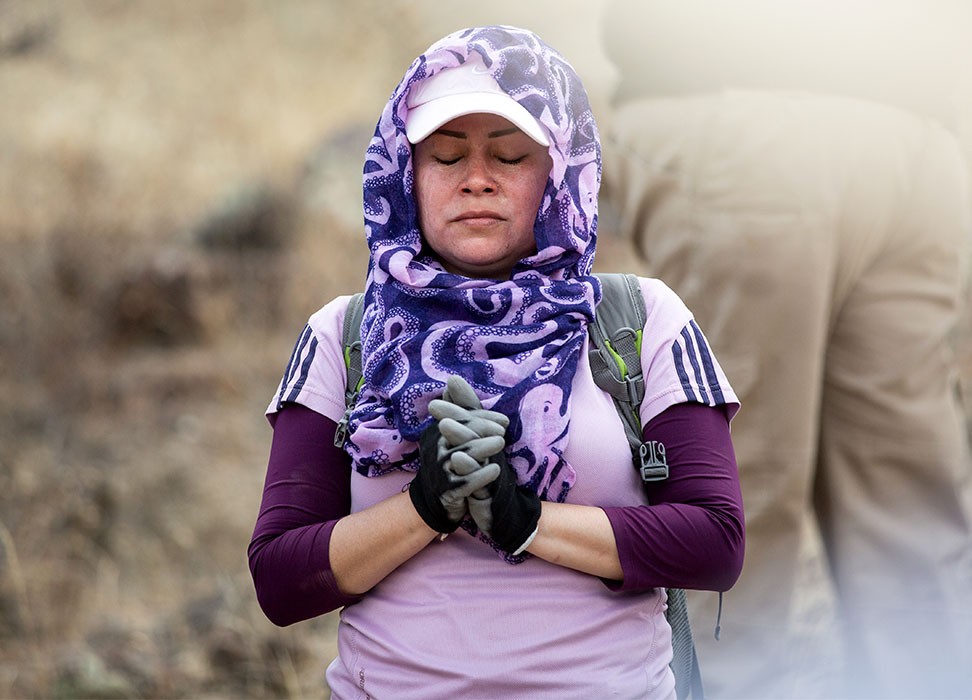
Foto: © OHCHR/Vincent Tremeau
-

- ©BarbaraDietl
-

- ©BarbaraDietl
-

- ©BarbaraDietl
-

- ©BarbaraDietl